Care
You will acquire the skills and knowledge to care for people and work towards their recovery - both in hospitals, primary care and social-health centers.
Enrolment open
Schedule 2027/28
1st and 2nd year:
Morning shift: from 8:00 to 14:00
3rd and 4th year:
Morning shift: from 8:00 to 14:00
Midday shift: from 12:00 to 18:00
Facultat de Ciències de la Salut (carrer de Padilla, 326, 08025 Barcelona)
Blanquerna School of Health Sciences
Bachelor's degree with a high Employment Quality Index (67.60%), above the average for the bachelor's degree in Nursing (65.50%)
The Employment Quality Index (EQI) takes values from 0 to 100 and is built based on four indicators: contract, job satisfaction, remuneration and adequacy. The higher the values, the better the employment quality (greater stability, satisfaction, remuneration or suitability).
AQU Catalunya data:
If you are interested in the field of health, healthcare, hospital or primary care, the bachelor's degree in Nursing is the one for you. You will be trained to acquire the knowledge and skills required to care for people and to accompany them, whether they are sick or in order to foster health in the community.
You will acquire the skills and knowledge to care for people and work towards their recovery - both in hospitals, primary care and social-health centers.
You will be trained to lead and coordinate health teams, manage resources and care services, and design improvements in health policies.
The bachelor's degree in nursing introduces you to the area of research and innovation in health, and teaches you the core aspects for the nursing profession.
You will gain the knowledge that will enable you to gain a foothold in health education. This is one of the key tasks conducted by nurses with the groups of citizens who require it.
Caring for people is the most important challenge you can take on, and that is what we as nurses do

employment rate (specific data for bachelor's degree, according to AQU)
agreements with renowned internship centers
of students would take the degree again
hours in simulation classrooms
A unique way of understanding university learning: personalized, relational, experiential, and connected to career and social reality.
Learn in small groups with tailored tutoring. At the BQN15 seminars, you will have a voice, close follow-up, and an environment for debate to maximize your talent and development.
Live your profession from day one. Practice with real cases, virtual environments, and ACOE tests to gain the confidence and assurance you need before taking the leap into the working world.
Put your knowledge at the service of society. Apply everything you learn in projects with real organizations, connecting your future profession with the needs of your environment.
The future is interdisciplinary. With the Nexus project, you will work with students from other bachelor degrees to solve real challenges and develop the global and collaborative vision that the market is looking for.

Study for two majors simultaneously, consecutively or following a track tailored to you
News
July 28, 2023

July 12, 2023
July 7, 2023

July 5, 2023
The Curriculum of the bachelor's degree in Nursing at Blanquerna-URL blends theory subjects with professional-building courses to ensure the high adaptability of our graduates.
| First | Second | Third | Fourth | Total | |||
| Final degree project | 10 | 10 | |||||
| Core curriculum | 36 | 24 | 60 | ||||
| Internships | 11 | 11 | 17 | 41 | 80 | ||
| Compulsory | 13 | 25 | 40 | 6 | 84 | ||
| Optional | 3 | 3 | 6 | ||||
| Total | 60 | 60 | 60 | 60 | 240 |
| Subject | Credits | Academic type | |
| First semester | |||
| Anatomy-physiology 1 | 6 | Core curriculum | |
| Biology | 6 | Core curriculum | |
| Document research and scientific communication | 6 | Core curriculum | |
| Nursing basics | 5 | Compulsory | |
| ENG/ Cuidados enfermeros básicos | 3 | Compulsory | |
| Second semester | |||
| Anatomy-physiology 2 | 6 | Core curriculum | |
| Psychsocial sciences | 6 | Core curriculum | |
| Community nursing 1 | 5 | Compulsory | |
| Annual | |||
| Health sciences seminar | 6 | Core curriculum | |
| Clinical placement 1 | 11 | Practicum | |
| Subject | Credits | Academic type | |
| Third semester | |||
| Clinical nursing 1 | 4 | Compulsory | |
| Physiopathology | 6 | Core curriculum | |
| English in Health Sciences | 6 | Core curriculum | |
| Clinical seminar | 3 | Compulsory | |
| Clinical pharmacology | 6 | Compulsory | |
| Fourth semester | |||
| Clinical nursing 2 | 5 | Compulsory | |
| Biostatistics | 6 | Core curriculum | |
| Anthropology | 6 | Core curriculum | |
| Clinical placement 2 | 11 | Practicum | |
| Annual | |||
| ENG/ Cuidados enfermeros clínicos | 7 | Compulsory | |
| Subject | Credits | Academic type | |
| Fifth semester | |||
| Community nursing 2 | 4 | Compulsory | |
| Professionalising seminar 1 | 3 | Compulsory | |
| Nutrition | 3 | Compulsory | |
| Nursing throughout life cycle 1 | 5 | Compulsory | |
| Nursing throughout life cycle 2 | 3 | Compulsory | |
| Health education and therapeutic communication | 3 | Compulsory | |
| Sixth semester | |||
| Bioethics and legislation | 5 | Compulsory | |
| Nursing in mental healthcare | 3 | Compulsory | |
| Option 1. Choose from one the following 4 options: | 3 | Optional | |
| Nursing of the surgical area | |||
| ENG/Cuidados integrales de las personas con heridas complejas | |||
| Nursing and multi-culture | |||
| Diagnosis and dysphagia-related care | |||
| Clinical nursing 3 | 4 | Compulsory | |
| Research methodology | 3 | Compulsory | |
| Annual | |||
| ENG/ Cuidados enfermeros avanzados | 4 | Compulsory | |
| Clinical placement 3 | 17 | Practicum |
| Subject | Credits | Academic type | |
| Seventh semester | |||
| Leadership in nursing | 3 | Compulsory | |
| Professionalising seminar 2 | 3 | Compulsory | |
| Option 2. Choose from one the following 4 options: | 3 | Optional | |
| ENG/Out-of-hospital clinical simulation | |||
| ENG/Salud digital y teleconsulta enfermera | |||
| Palliative care | |||
| Innovation in oncology | |||
| Clinical placement 4 | 13 | Practicum | |
| Eighth semester | |||
| Clinical placement 5 | 13 | Practicum | |
| Annual | |||
| Clinical placement 6 | 15 | Practicum | |
| End-of-degree project | 10 | Compulsory | |
| First | Second | Third | Fourth | Total | |||
| Final degree project | 10 | 10 | |||||
| Core curriculum | 36 | 24 | 60 | ||||
| Internships | 9 | 18 | 21 | 32 | 80 | ||
| Compulsory | 15 | 18 | 39 | 12 | 84 | ||
| Optional | 6 | 6 | |||||
| Total | 60 | 60 | 60 | 60 | 240 |
| Subject | Credits | Academic type | |
| First semester | |||
| Anatomy-physiology 1 | 6 | Optional | |
| Biology | 6 | ||
| Nursing basics | 5 | ||
| Computer science | 6 | ||
| Basic practical rotation | 3 | ||
| Second semester | |||
| Anatomy-physiology 2 | 6 | ||
| Communication | 6 | ||
| Community nursing 1 | 4 | ||
| Introduction to clinical practice 1 | 3 | ||
| Introduction to clinical practice 2 | 3 | ||
| Psychology | 6 | ||
| Annual | |||
| Interdisciplinary seminar | 6 | ||
| Subject | Credits | Academic type | |
| Third semester | |||
| Clinical nursing 1 | 6 | Compulsory | |
| Physiopathology | 6 | Core curriculum | |
| Pharmacology | 6 | Compulsory | |
| English 1 | 6 | Core curriculum | |
| Fourth semester | |||
| Clinical nursing 2 | 6 | Compulsory | |
| Statistics | 6 | Core curriculum | |
| Hospitalising practices 1 | 6 | Practicum | |
| Professionalising seminar 1 | 12 | Practicum | |
| Anthropology | 6 | Core curriculum | |
| Subject | Credits | Academic type | |
| Fifth semester | |||
| Nursing care applied to adolescence | 2 | Compulsory | |
| Nursing care applied to women | 2 | Compulsory | |
| Nursing care applied to infancy | 2 | Compulsory | |
| Community nursing 2 | 3 | Compulsory | |
| Education for healthcare and communication | 4 | Compulsory | |
| Mental healthcare | 2 | Compulsory | |
| Nutrition | 3 | Compulsory | |
| Community healthcare practices | 6 | Practicum | |
| Sixth semester | |||
| English in health sciences | 6 | Compulsory | |
| Care for the elderly and the dependent | 4 | Compulsory | |
| Bioethics | 4 | Compulsory | |
| Legislation | 3 | Compulsory | |
| Clinical nursing 3 | 4 | Compulsory | |
| Hospitalising practices 2 | 5 | Practicum | |
| Annual | |||
| Advanced practical rotation | 10 | Practicum | |
| Subject | Credits | Academic type | |
| Seventh semester | |||
| Leadership in nursing | 3 | Compulsory | |
| Professionalising seminar 3 | 6 | Compulsory | |
| Public healthcare | 3 | Compulsory | |
| Palliative treatment | 3 | Optional | |
| Nursing and multi-culture | 3 | Optional | |
| Complementary therapies | 3 | Optional | |
| E-health | 3 | Optional | |
| End-of-degree practice 1 | 7 | Practicum | |
| Eighth semester | |||
| End-of-degree practice 2 | 12 | Practicum | |
| End-of-degree practice 3 | 13 | Practicum | |
| Annual | |||
| End-of-course project | 10 | Final degree project | |
Course fees are paid in installments without any interest. At the time of enrollment, 50% of the total cost of the credits for which the student is enrolled must be paid*; the remaining 50% is split into nine monthly installments (from October to June) payable by direct debit.
The tuition fee / credit of degrees is regularized each academic year for all courses.
Fundació Blanquerna discounts (not cumulative with each other):
In order to apply the discount, you must prove it with the corresponding document. Students must bring the original document in person to the Academic Secretariat, together with their identification document, for validation and application of the corresponding discount.
The deadline for submitting the supporting documentation for the 2027-2028 course is September 30th, 2027.

Anna Martin Arribas
Elena Carrillo Messa
Marta Guillen Vila
Patricia Martinez Jaimez
Marta Villanova Trullenque
Miriam Algarra Ramos
Francesc Alos Colomer
Angels Aloy Orozco
Miriam Armora Verdú
Luana Barreto Da Silva
Rosa Bayot Escardivol
Sofia Berlanga Fernández
Marta Bisbe Gutiérrez
Alicia Borras Santos
Roser Cabezas Mitjans

Neus Calpe Damians
Fernando Campaña Castillo
Olga Canet Velez
Xavier Cardona Iguacen
Susana Casaus Carmona
Núria Colas Migo
Maria Mercè Comes Forastero
José Antonio Cordero Rigol
Lluís Costa Tutusaus
Meritxell Davins Riu
Daniela Clara De Freitas Vieira

Marina Diana Perez
Ana Mercedes Diaz Rivera
Eloisa Carmen Entrala Torres
Montserrat Esquerda Areste
Marta Faixo Rubio
Cindy Esther Frias Torres
Goretti Garcia Castrillo
Matilde Garrido Luque
GaryG Gibson
Natàlia Gómara Toldrà
Olga Gomez i Díaz
Monica Gonzalez Duran

Julian González García

Anna Gros Turpin
Vanessa Gutiérrez Vallés
Rosa Maria Iribarren Romera
Azucena Justicia Diaz
Marta Llobet Ribas
Giuliana Raffaella Longworth

Elena López Domènech
Alejandro Lopez Gonzalo
Susana Malgrat Caballero
Natalia Mangas Fernández
Marta-Irene Martín Mestre
Nuria Martínez Boo
Yolanda Martínez Campo
Concepción Mestres Miralles
Pol Miguel Puigbarraca

Raimon Milà Villarroel

Francesc Mirada Masana
Alba Monclús Astudillo

Ana Monge Guerrero
Sandra Moreno Perez
Sofia Navarro Santos
Cristina Olivé Adrados

Alicia Orta Ramirez
Olalla Pancorbo Rosal
Javier Perez Dueñas

Sandra Pérez Rodríguez
Montserrat Piñol Perez Rejon
Pilar Puente Oliete
Marta Reyes Vizcarro
Maria Rosa Rifà Ros
Miriam Rodríguez Monforte
Maria del Mar Rosàs Tosas
Elisabet Saravia Terricabras
Carolina Taramon Costarrosa
Yolanda Torralba García
Andrea Urbina Moral
Elisabet Vendrell Aubach
MIREIA Vidal Ramperez
Pedro Vizan Carralcazar
Elena Yela Gonzalez
Montserrat Sanromà Ortíz
At Blanquerna, we emphasize the importance of internships at external centers. That is why we have agreements with more than a thousand organizations and entities where you can apply your theoretical knowledge to the professional world and start focusing on your professional future based on the reality of the sector.
Ability to adapt to new situations.
Working as a team, fostering effective and plural communication.
Establishing an empathetic and responsible relationship with the patient and family.
Guaranteeing the right to dignified health care, upholding privacy, intimacy and confidentiality.
Catalan Public Health Agency · European Grouping of Territorial Cooperation. Hospital de la Cerdanya · Centre Integral de Salut Cotxeres · Centre Geriàtric Catite · Centre Mèdic Atlàntida · Centre Mèdic Teknon · Centre Residencial L'Ametlla del Vallès · Centre Sociosanitari Can Torres · Centre Sociosanitari Dolors Putget · Centre Sociosanitari Frederica Montseny · Centre Sociosanitari El Carme · Centre Sociosanitari Mutuam Güell · Centre Sociosanitari Palau · Centres Assistencials Dr. Emili Mira · Clínica Corachán · Clínica del Remei · Clínica Diagonal, S.L. · Clínica Llúria · Clínica Nostra Senyora de Guadalupe · Clínica Sant Antoni · Col·legi d’Infermeres i Infermers de Barcelona · Consorci Mar Parc de Salut de Barcelona. Centre Fòrum · Consorci Mar Parc de Salut de Barcelona. Hospital del Mar · Consorci Sanitari de l'Anoia · Consorci Sanitari del Garraf · Consorci Sanitari de l'Alt Penedès · Consorci Sanitari de Terrassa. Hospital de Terrassa · Consorci Sanitari del Maresme. Hospital de Mataró · Corporació de Salut del Maresme i la Selva · EBA Vallcarca SLP · Fundació Hospital Asil de Granollers · Fundació Hospital de l´Esperit Sant · Fundació Privada Institut de Neurorehabilitació Guttmann · Fundació Puigvert · Fundació Santa Eulàlia · Fundació Sociosanitària de Barcelona · Vallparadís Foundation · Fundació Vella Terra · Fundació Viure i Conviure. Llar Sant Jordi · Geriàtric Aragó, S.L. · Grup Mutuam · Hèstia Duran i Reynals · Hèstia Mataró · Hèstia Gràcia · Hospital de Girona Dr Josep Trueta · Hospital Dos de Maig · Hospital de Sant Celoni · Hospital de Mollet · Hospital Universitari de la Vall · Hospital Universitari Mútua de Terrassa · Hospital Asepeyo de Sant Cugat · Hospital Comarcal de l’Alt Penedès · Hospital de Granollers · Hospital de Nens de Barcelona · Hospital de Sant Jaume · Hospital de Sant Joan Despí Moisès Broggi · Hospital de Sant Rafael · Hospital Evangèlic · Hospital General de l'Hospitalet · Hospital General de Catalunya · Hospital Universitari Germans Trias i Pujol · ITA Barcelona · ITA Maresme · Lepant Residencial · Orpea Ibérica · Parc Sanitari Pere Virgili · Parc Sanitari Sant Joan de Déu · Residència d'avis l'Estada · Residència Geriàtrica d'Horta · Residència Geriàtrica El Mil·lenari · Residència Jaume Nualart · Residència La Creueta · Residència La Salut · Residència Las Acacias · Residència Los Sauces · Residència Los Tilos · Residència Onze de Setembre · Residència Porta · Residència Privada Pere Relats · Residència Roca i Pi. Fundació Privada Llegat Roca i Pi · Residencial Augusta Park · Residencial Sitges Park · Sanitas Residencial · Sar Quavitae. Residencial Claret · Vitalia Bilbilis, S.L.
The Bachelor's Degree in Nursing qualifies students to work in the field of health and enables them to practice the profession in different sectors: care, teaching, research or management. Nursing can be practiced on an independent basis, by freely exercising the profession, or in public or private institutions.

Being on care teams in hospitalization units or specific services, social-health centers, residences, etc.

Follow-up of chronic patients, health fostering campaigns, health policy design, etc.

Being on health research teams.
Training of students in educational centers.

Our work doesn't finish the moment you graduate. The Alumni department will support you to enable us to achieve an employment rate of 90% of students in the first year after graduation
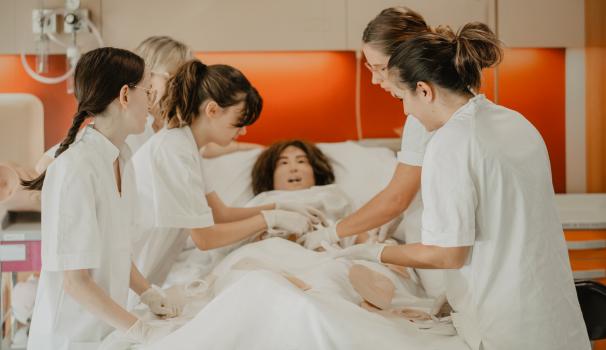
Putting theory into practice is key to gaining knowledge. In the case of nursing, it is a key aspect before dealing with patients. The faculty has simulation classrooms to prepare students for clinical interventions.

This room has teaching resources so that students can become familiar with the human body, identify and locate muscles, bones, arteries, veins or nerves.
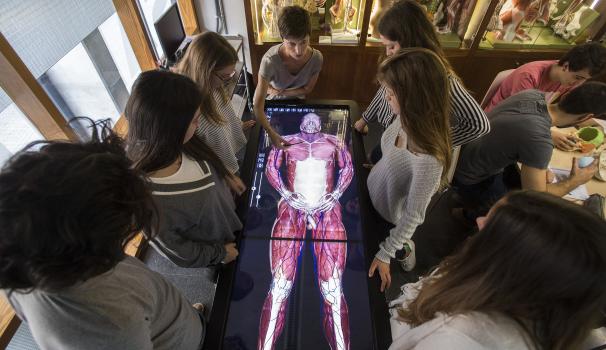
See human anatomy in its entirety on a real scale and in 3D. This is the reality that allows the anatomy, an interactive display table to see any anatomical system of the human body.

The chapel is the right place to find recollection, peace, to focus, to pray and to celebrate the Eucharist weekly and at important liturgical moments (Christmas, Ash Wednesday and Easter). The sacrament of reconciliation is also celebrated.

If you need a quiet space to study or to do individual and group work, come to the library! Each school has its own library with computers, workrooms, reading points and an extensive catalog of documents you can consult in both hard copy and digital format.

The Academic Secretaries of the Blanquerna faculties are the space for students to relate to the processes linked to the registration of official and own courses.

Professional experience is a core part of our methodology. For this reason, we have a broad spectrum of internship agreements to meet the needs and preferences of all students. You will graduate having worked in your industry.

At Blanquerna, we put the future within everyone's reach thanks to our scholarships and grant service to start or continue studying at our schools. Financial aid is both internal and external to the university. You will find a wide range of possibilities.

Going abroad is a unique opportunity to discover the plurality of the world. Aware of the importance of the internationalization of studies, we have established mobility agreements around the world.
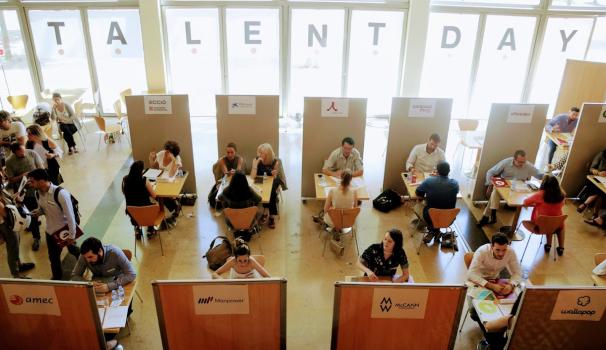
This service provides graduates with the necessary means so that they can actively participate in their professionalism and propose optimal candidates to organizations and companies looking for staff.

The leap into the world of work is always a challenge. For this reason, we provide a Job Bank for students and graduates. This service puts students in touch with companies and institutions looking for staff.
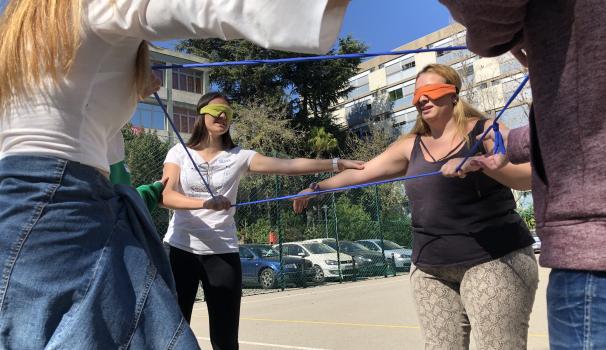
Solidarity and the struggle for human dignity are values that identify us. Social Commitment is a volunteer program that our students can join to participate in projects in the Third and Fourth World.

Studying in Blanquerna allows you to be part of our community. Being a college student opens the door to a lot of options for continuing your vocational training beyond your time in the classroom.

Want to represent the URL in college sports tournaments? You can find a wide range of possibilities for both individual and team sports. To be a student of Blanquerna, you will have a discount at the Can Caralleu and La Salle Sport & Fitness sports complexes.

If you are in a difficult situation in the academic, personal or social field, you can request, free of charge, the personalized attention of the SOP. This is an interdisciplinary team of professionals who will guide you in dealing with the situation.
In the three Blanquerna faculties, you will find spaces for reflection isolated from the hustle and bustle dedicated to the celebration of the Faith or cultural and religious animation. If you wish, you can also receive personalized attention and information about church life.

At Blanquerna we promote personal development at all levels to people with a diversity of specific needs from a normalizing context that encourages personal autonomy and uniqueness.
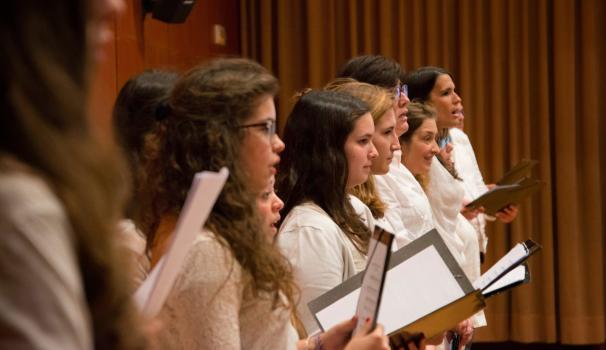
If you like music and want to take part in the concerts of institutional events and festivities, sign up for the Blanquerna Choir. There you will meet new friends and enjoy music.

Each class group must elect a representative to put forward concerns or make proposals to the faculty members and academic management. At the same time, each degree must appoint a delegate and each school a representative on the general URL council.

Contact between students and the university is constant and is channeled through the Student Council, the body that collects proposals and requests from students and facilitates university life.

Are you studying a foreign language and want to improve your level? Do it at your own pace in the language self-learning classroom. This service offers various teaching resources and materials to practice the language.
The application process for the 2027–2028 academic year opens on 28 October 2026 and consists of three phases:
Applications can be submitted online or in person and entitle applicants to participate in the admissions process. The application deadline is June 28, 2027.
You can apply using the Application for Admission button on each degree program's webpage or directly here. To apply, you must:
You can apply directly at the Faculty by visiting the Student Information and Guidance Service (SIOE). You must submit:
Approximately two business days after submitting the application, students will be notified of their admission status by email. If admitted, they will receive an invitation to complete their enrollment, along with instructions on when and how to do so.
For the Bachelor's Degree in Nursing, as well as dual degree programs that include Nursing (such as Nursing and Social Work or Nursing and Human Nutrition and Dietetics), the admissions process is divided into two phases:
If you already have your final university admission grade
If your final university admission grade, after passing the PAU university entrance exams, is 6 or higher, you may be admitted and invited to complete your enrollment during the priority admission phase, provided that places are available.
If your grade is below 6, you may participate in the place allocation process starting on June 21, 2027.
If you do not yet have your final university admission grade
You must submit an official certificate issued by your educational institution confirming one of the following grades:
Depending on the grade submitted:
Once your final university admission grade is available, you must submit the corresponding official certificate.
Important: the provisional grade allows your application to be assessed and, where applicable, conditional enrollment to be completed. However, it does not replace the requirement to obtain the final qualification granting access to university studies.
If you already have your final CFGS grade or officially recognized Bachillerato qualification
If you have completed a CFGS and your average grade is 7 or higher, you may be admitted and invited to complete your enrollment during the priority admission phase, provided that places are available.
If your grade is below 7, you may participate in the place allocation process starting on June 21, 2027.
If you do not yet have your final CFGS grade
You may still submit your application, but you will participate in the place allocation process starting on June 21, 2027.
To participate, you must submit an official certificate from your educational institution confirming your final CFGS average grade as soon as it becomes available.
If you already have your final officially recognized Bachillerato grade
If your average grade is 7 or higher, you may be admitted and invited to complete your enrollment during the priority admission phase, provided that places are available.
If your grade is below 7, you may participate in the place allocation process starting on June 21, 2027.
If you do not yet have your final officially recognized Bachillerato grade
You may still submit your application, but you will participate in the place allocation process starting on June 21, 2027.
To participate, you must submit an official certificate confirming your officially recognized Bachillerato grade as soon as it becomes available.
If you have started university studies, whether or not you have completed them, you must contact the Faculty's Student Information and Guidance Service (SIOE) before submitting your application.
The Service will provide information about the admissions procedure applicable to your academic background and the possibility of applying for credit recognition.
Once the priority admission phase has ended, applications that have not been allocated a place, along with new applications, will be considered in the place allocation process.
Places will be allocated based on availability and the criteria established for each degree program. For the Bachelor's Degree in Nursing, the first criterion will be the applicant's grade (weighted according to their university entry pathway), followed by the date on which the application fee was paid.
Participation in the place allocation process does not guarantee admission.
In all cases, a place will only be definitively confirmed once the student has submitted the documentation confirming their final eligibility for university admission and made the first tuition payment.
For degree programs taught in English, students must demonstrate a minimum B2 level of English to be admitted. This can be assessed through the English placement test that all students enrolled in the program must take before beginning their studies. Alternatively, students may demonstrate the required level by submitting an official language certificate at B2 level or higher, including IELTS (6–7), TOEFL (iBT 90–110), Cambridge English qualifications, or certificates issued by Spain's Official Language Schools (Escuelas Oficiales de Idiomas), obtained within the last two years. Certificates from other organizations will not be accepted. Submitting a certificate does not exempt students from taking the placement test, which determines the level of English they will study during their first year.
Students are responsible for ensuring that they have at least a B2-equivalent level of proficiency in the language of instruction to be able to follow classes successfully.
Students invited to enroll may choose between two options, depending on whether they have already obtained their final university entry qualification.
Students may enroll in the degree program before passing the PAU university entrance exams or obtaining their final university entry qualification. Enrollment will remain conditional upon submitting the required documentation confirming eligibility for university admission.
If a student has enrolled but does not obtain the required university entry qualification in June, they will have two options:
Final enrollment can be completed if the student already meets the university entry requirements at the time of enrollment. Students may choose from the available places and class schedules.
IMPORTANT: Degrees with more than one shift may exhaust places in a specific schedule with conditional enrollment. The required documentation must be uploaded via the Document Repository.
The place will be definitive once the student has submitted the documentation with the final university entrance information and the first enrollment payment has been made.
Studies can be paid upfront and/or in interest-free installments. If payment by installment is selected, upon enrollment the student will have two business days to pay 50% of the total cost of the enrolled credits, using their chosen form of payment; this payment will not be taken by direct debit. The remaining 50% will be divided into nine monthly payments from October to June via bank direct debit from the account provided at the time of enrollment. Prices for each academic year are updated annually.
Once payment is made, the corresponding receipt of enrollment can be viewed in the student's Document Repository and via the student's portal.
For the foreign student admission process, the following considerations and requirements must be taken into account in accordance with the prevailing regulations.
Students must apply to the Universidad Nacional de Educación a Distancia (UNED) to obtain the credential certifying that they meet the requirements to access university studies within the state education system (UNED Credential). Therefore, they do not need to take the PAU (University Entrance Exams), but without the mentioned credential, they cannot enroll in our degrees.
The education systems that can be accessed through this pathway are: Germany, Andorra, Austria, European Schools (European baccalaureate), International Baccalaureate, Belgium, Bulgaria, Croatia, Denmark, Slovakia, Slovenia, Estonia, Finland, France, Greece, Hungary, Ireland, Iceland, Italy, Latvia, Liechtenstein, Lithuania, Luxembourg, Malta, Norway, the Netherlands, Poland, Portugal, the United Kingdom, the Czech Republic, Romania, Sweden, Switzerland, China and Cyprus.
These students may access our degrees by submitting the homologation of the High School diploma from the Spanish Ministry of Education or from the autonomous communities with transferred competence, such as the Generalitat de Catalunya. Proof of application for convalidation will be sufficient for students to enroll and begin taking a bachelor's degree course, however full enrollment is conditional on convalidation being confirmed. Bear in mind that convalidating studies can take more than three months to complete, so this process should be done in parallel with the admissions process to our bachelor's degrees. If the convalidation resolution is not obtained in the terms requested by the interested party, the results of any exams taken, or the enrollment made as a result thereof, are rendered null and void.
For any questions or inquiries about the place application or enrollment process, contact [email protected].
The bachelor's degree thesis is a project that marks the end of the bachelor studies stage. It must be a complete and relevant work, enabling students to integrate the competences, knowledge and skills acquired during their bachelor's degree learning and must be applicable to the professional sphere in any of its aspects.
It is an individual, tutored project, with defense, assessment and grading according to established regulations, in which the student is responsible for their own learning process.
The thesis will consist of the completion and presentation by the student of an unpublished work that is included in one of the areas of knowledge proposed by each degree program. The possible types of thesis project are:
The follow-up of the thesis is structured on the basis of the formation of groups of 12 students (approximately) accompanied by 2 tutors, who will work in one of the established areas of knowledge. There are four group sessions and the rest of the follow-up is individualized.
The final grade of the thesis will be the weighted average of three grades:
25% follow-up, 40% written work, 35% defense.

Reports
Information from the Registry of Universities, Centers and Degrees (RUCT)
Reports by the Agency for the Quality of the University System of Catalonia (AQU Catalunya)
As the European Union points out, gender equality is not only a matter of social justice but also affects the results of teaching and research. Promoting gender equality in research and innovation is one of the European Commission's commitments, and it supports the explicit integration of a gender perspective in Horizon 2020 projects. However, this recommendation is often poorly understood and misapplied. Various documents are presented here with a view to contributing to a better understanding and application of the gender perspective in teaching and research.
RELATED PROGRAMS
Because who you become matters